Overview
A definitive property option agreement was signed and announced by the Company in September 2025 to allow Collective Metals Inc. (CSE:COMT) to acquire up to 75% interest in the Rocas Project by completing the 3-Year Earn-In Option outlined below.
| Consideration Payments | Consideration Shares | Exploration Expenditures | Operator Fees | |
|---|---|---|---|---|
| Year 1 | $75,000 | $100,000 | $1,500,000 | 10% |
| Year 2 | $50,000 | $275,000 | $1,500,000 | 12% |
| Year 3 | $125,000 | $325,000 | $1,500,000 | 12% |
| Total | $250,000 | $700,000 | $4,500,000 |
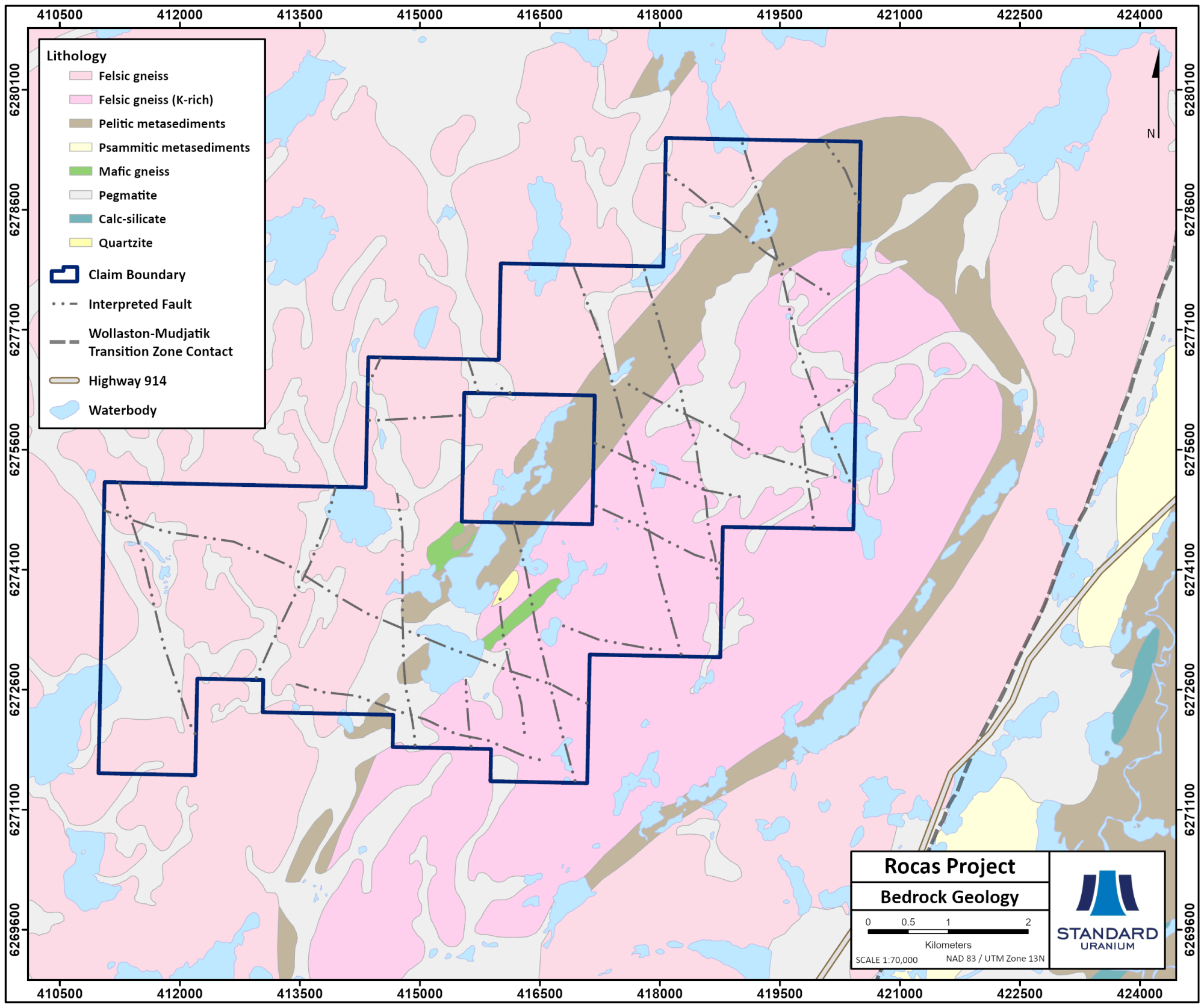
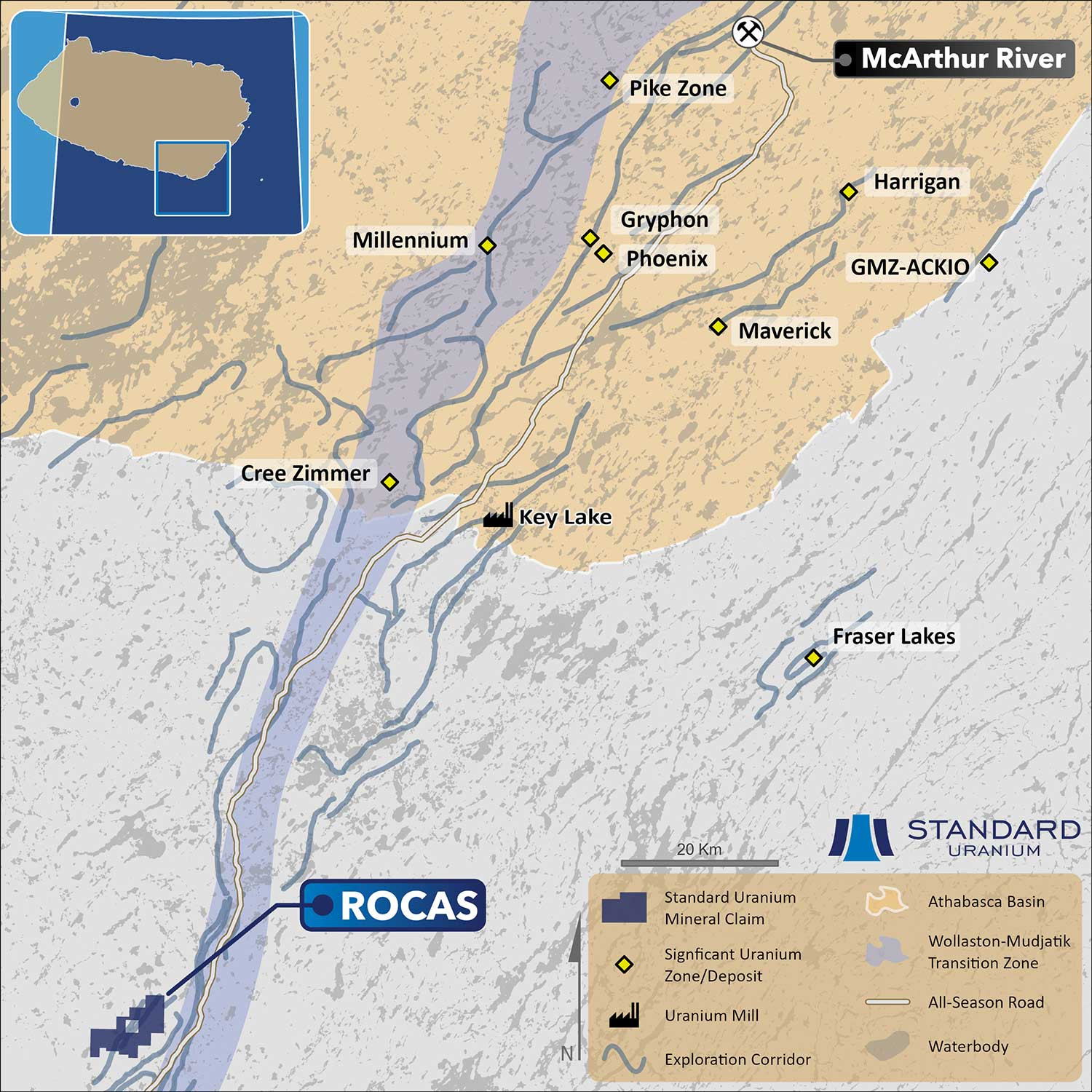
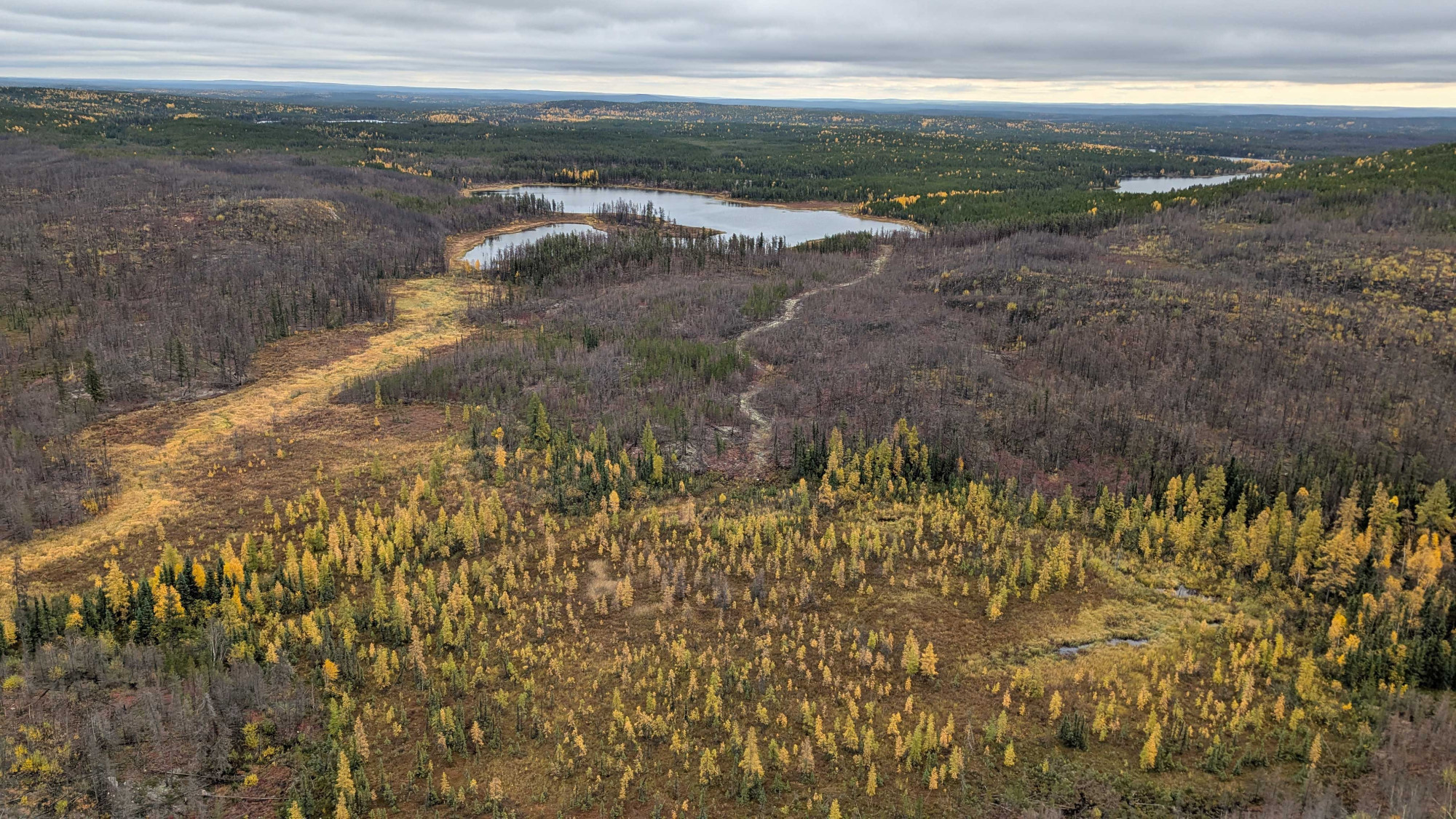
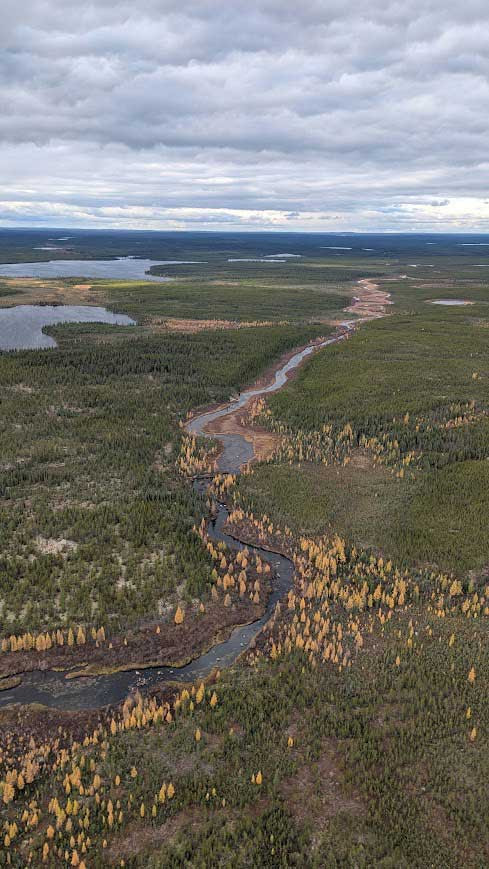
The Rocas project comprises three mineral dispositions totalling 4,002 hectares, located 75 km southwest of the Key Lake Mine and Mill facilities along Highway 914, and approximately 72 km south of the present-day margin of the Athabasca Basin. The project was acquired via staking in May 2023, and Standard Uranium holds a 100%-interest in the property.
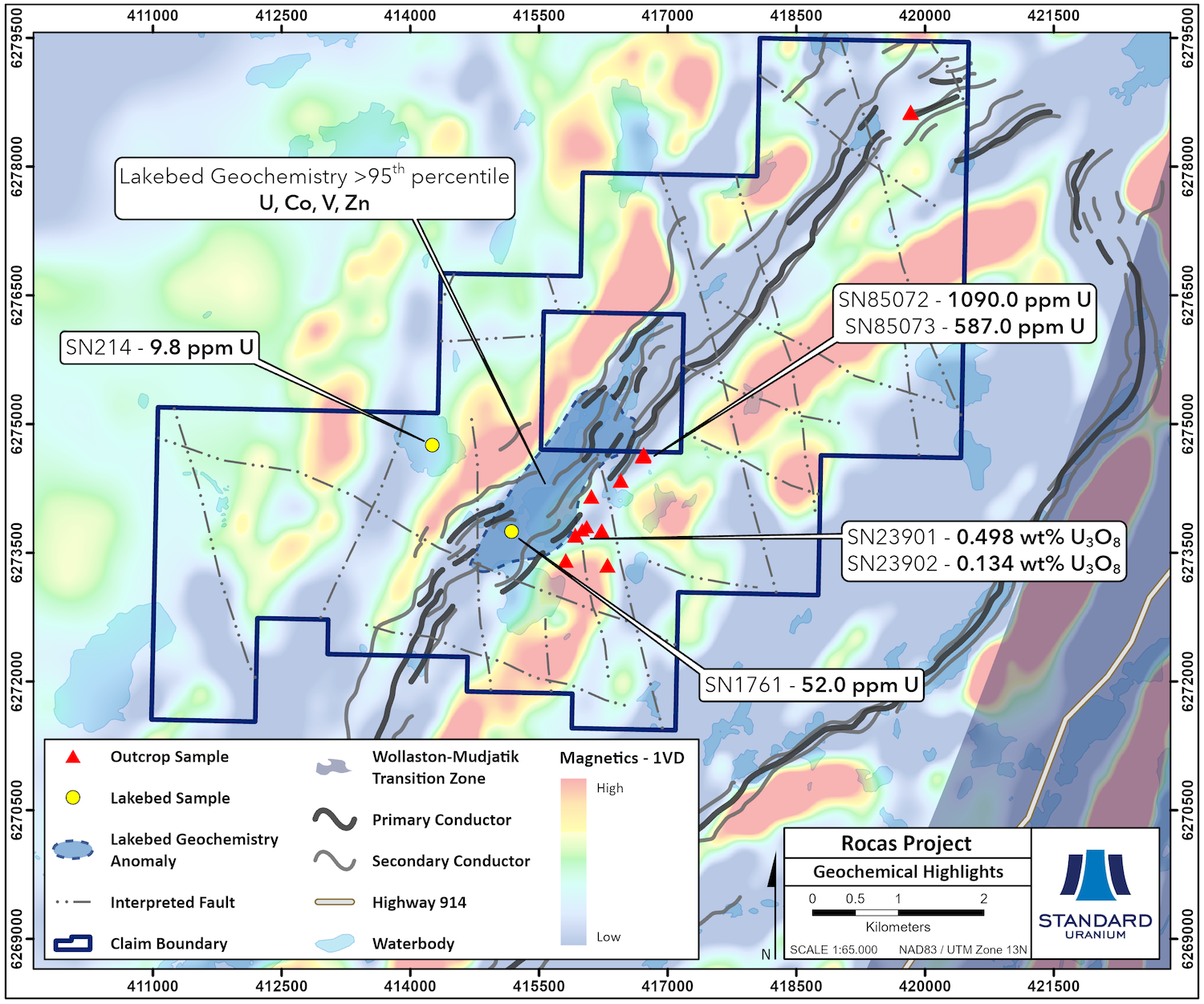
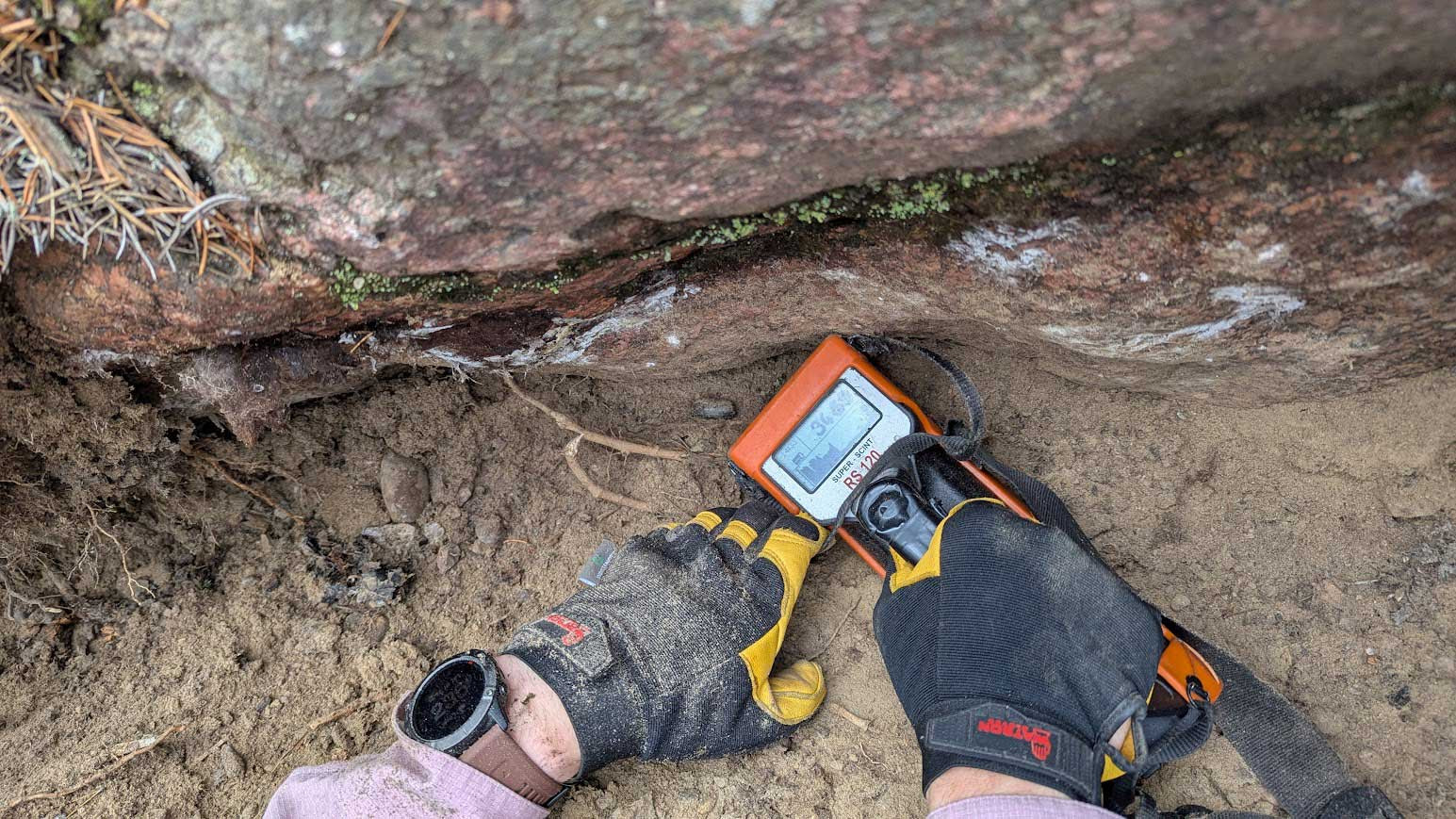
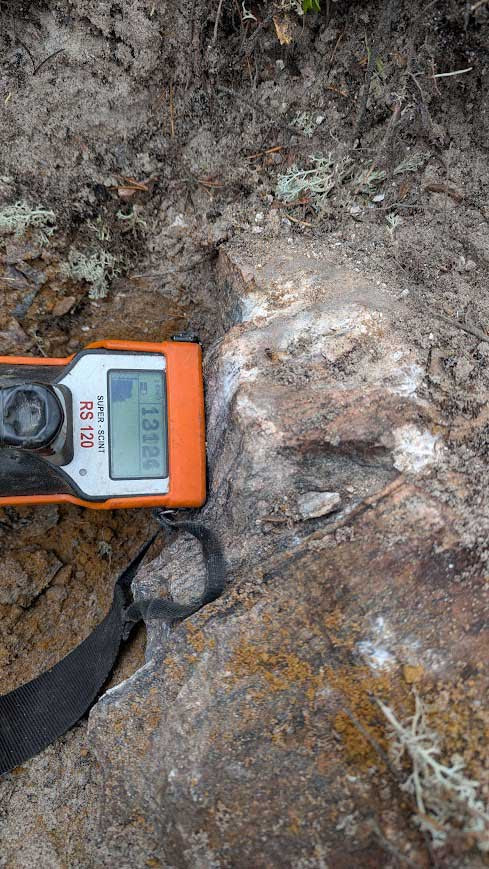
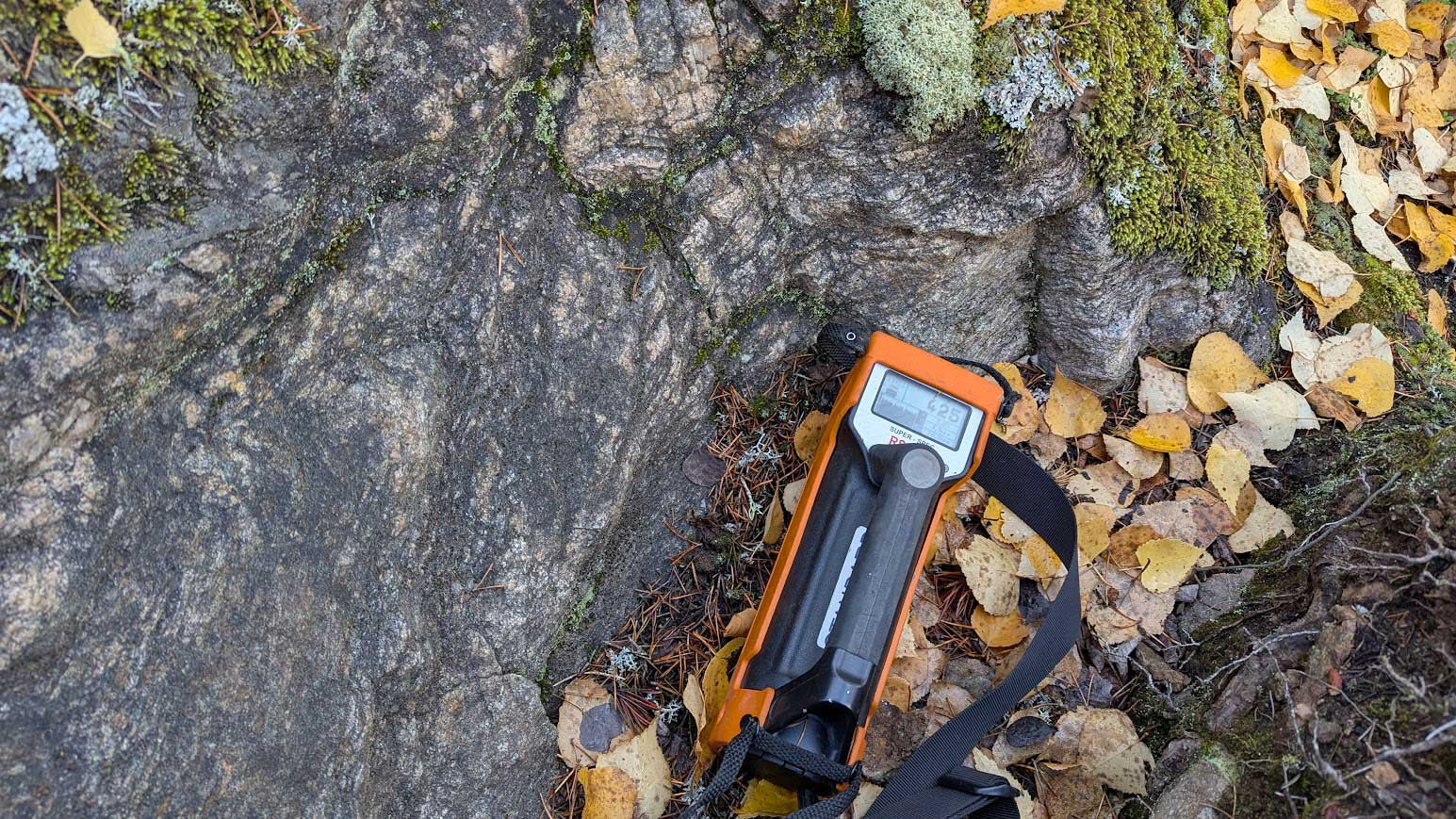
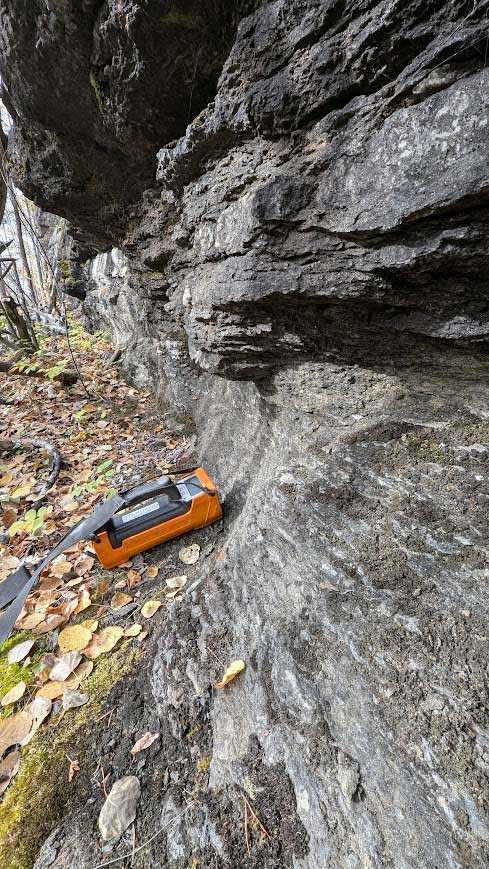
The Project covers 7.5 kilometres of a northeast trending magnetic low/electromagnetic (“EM”) conductor corridor which hosts several uranium anomalies, including historical mineralized outcrop grab samples along approximately 900 m of strike length, grading up to 0.50% U3O8. Notably, none of the historical uranium occurrences have been drill-tested.
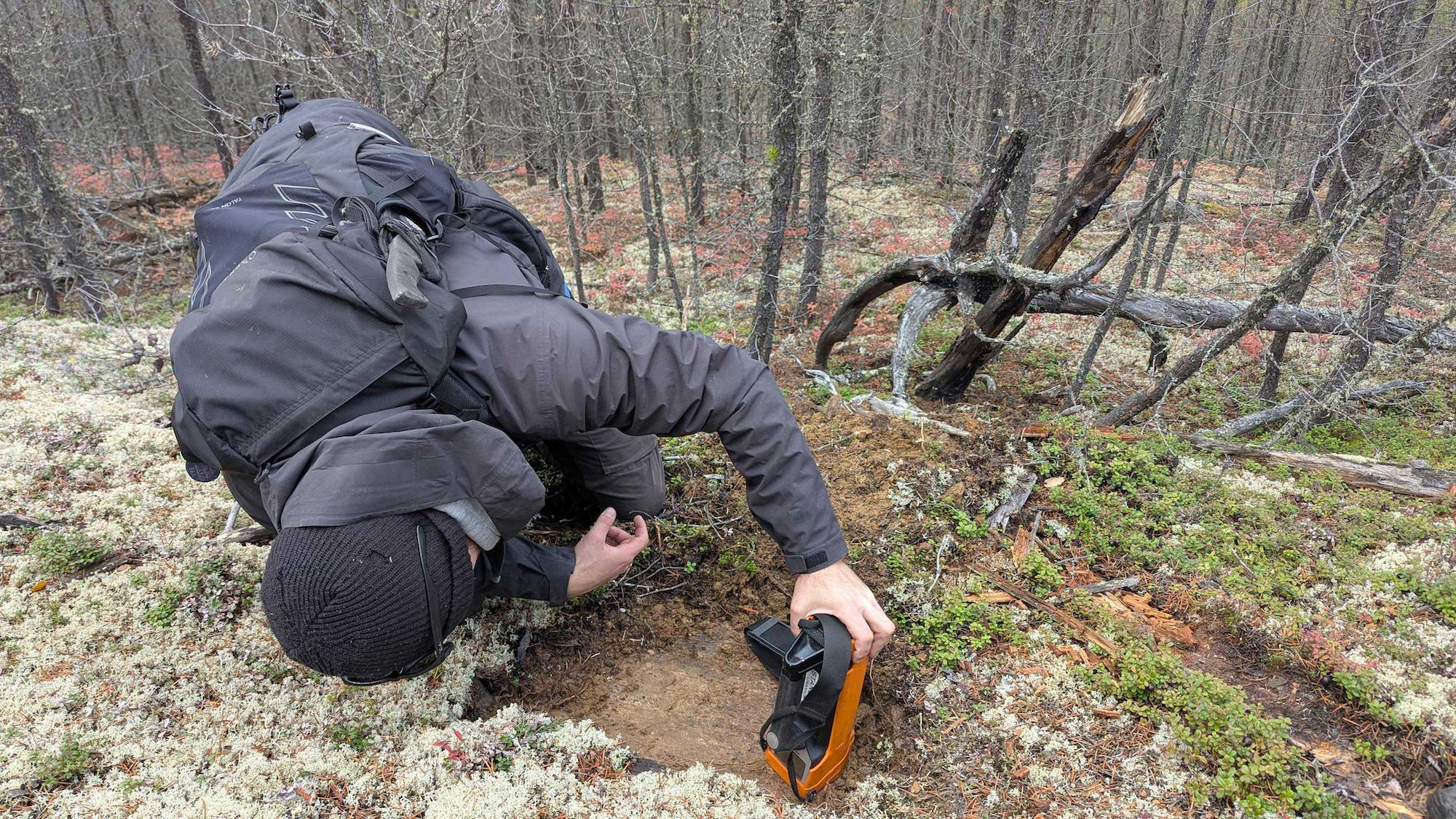
Historical airborne EM work in 2017 defined conductive trends on the Project west of and sub-parallel to the Key Lake Road shear zone, corresponding with favourable metasedimentary basement lithologies. Multiple parallel conductors, offsets, and termination points indicate the trend widening and potential cross-cutting structures. Additionally, a 2007 field sampling program identified anomalous lakebed geochemical anomalies that statistically rank as greater than 95th percentile U, Co, V, and Zn along the conductor corridor, including high U/Th ratios.
In 2024, the Company completed a high-resolution ground gravity survey along known conductive exploration trends on the Rocas project. The survey was designed to aid in the identification of potential zones of hydrothermal alteration of host rocks associated with uranium mineralization events.
Multiple new drill target areas have been identified on the Rocas project, outlined via the confluence of low gravity anomalies, historical surface mineralization, lakebed geochemical anomalies, EM conductors, and crosscutting fault zones. The integration of historical results with these newly developed target areas has generated prospective drill targets, which the Company plans to drill test in 2026.
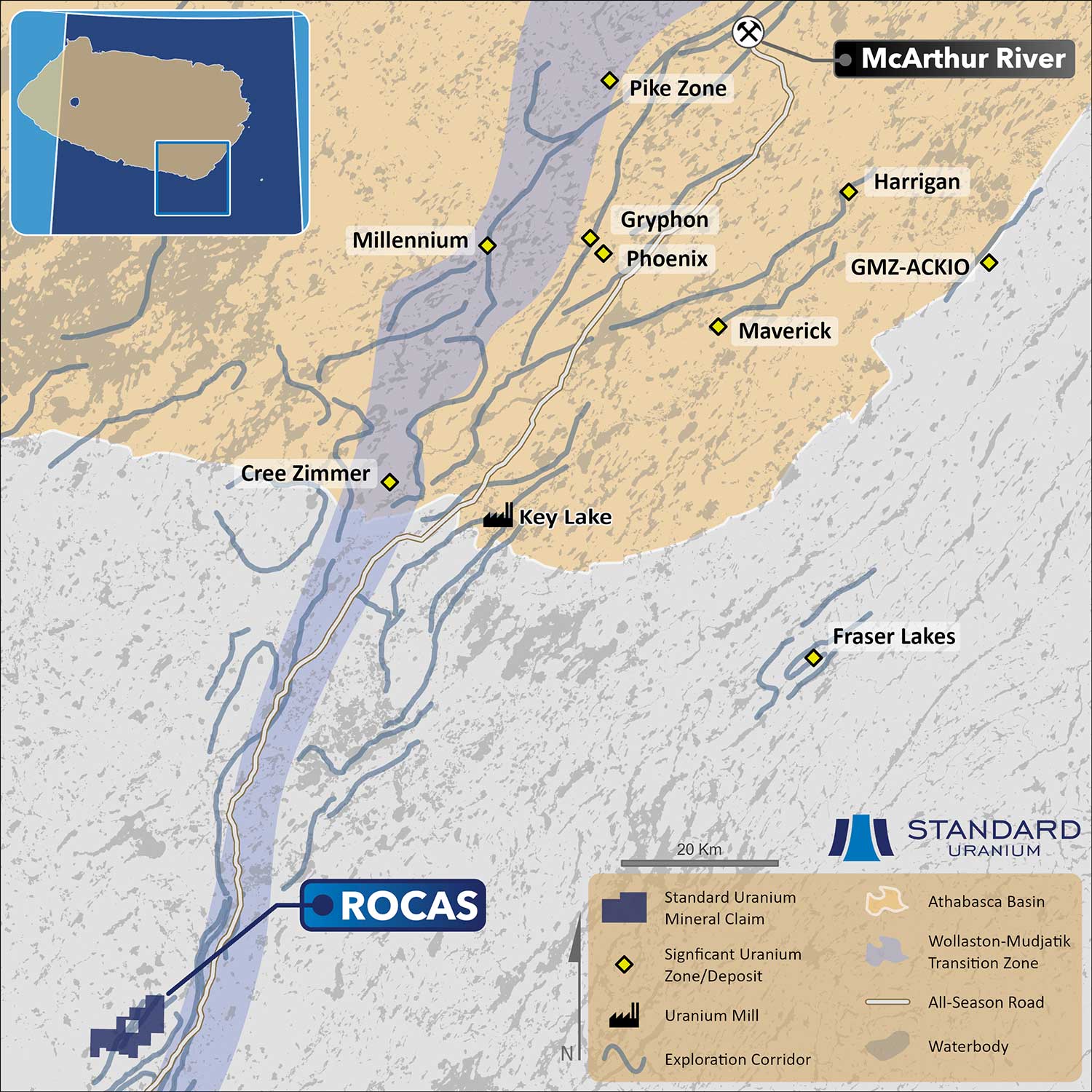
Southeastern Athabasca Uranium District
Technical Reports
Disclosure of Technical and Scientific Information
Except as otherwise noted herein, Sean Hillacre, MSc. P.Geo., Standard Uranium’s VP Exploration, has reviewed and approved the scientific and technical information contained in this website. Mr. Hillacre is a Qualified Person within the meaning of Canadian Securities Administrator’s National Instrument 43-101.