Overview
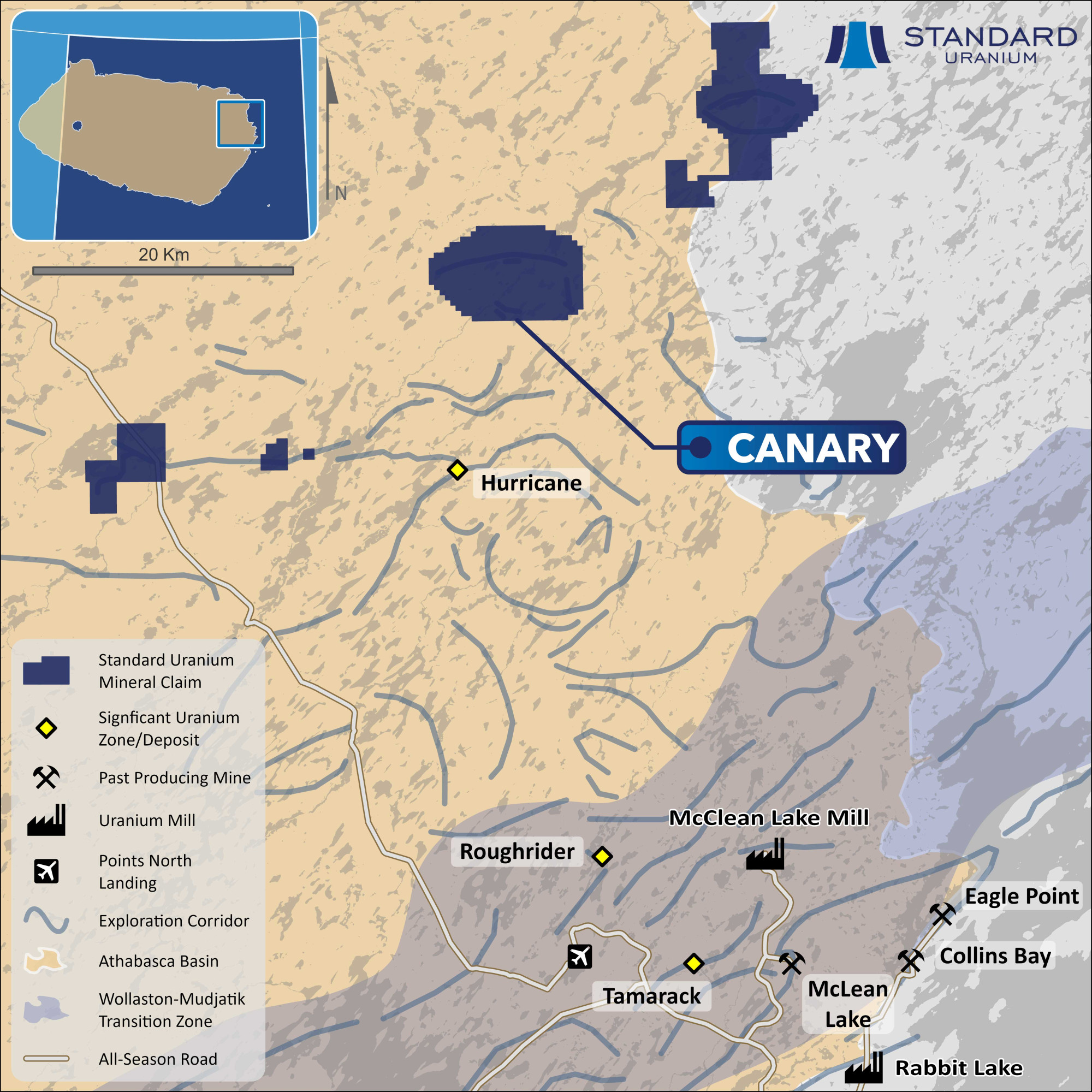
The Canary project comprises 2 mineral dispositions totalling 7,303 hectares, located along the Waterfound River in the eastern Athabasca Basin. The project was acquired via staking in July 2020, and Standard Uranium holds a 100%-interest in the property.
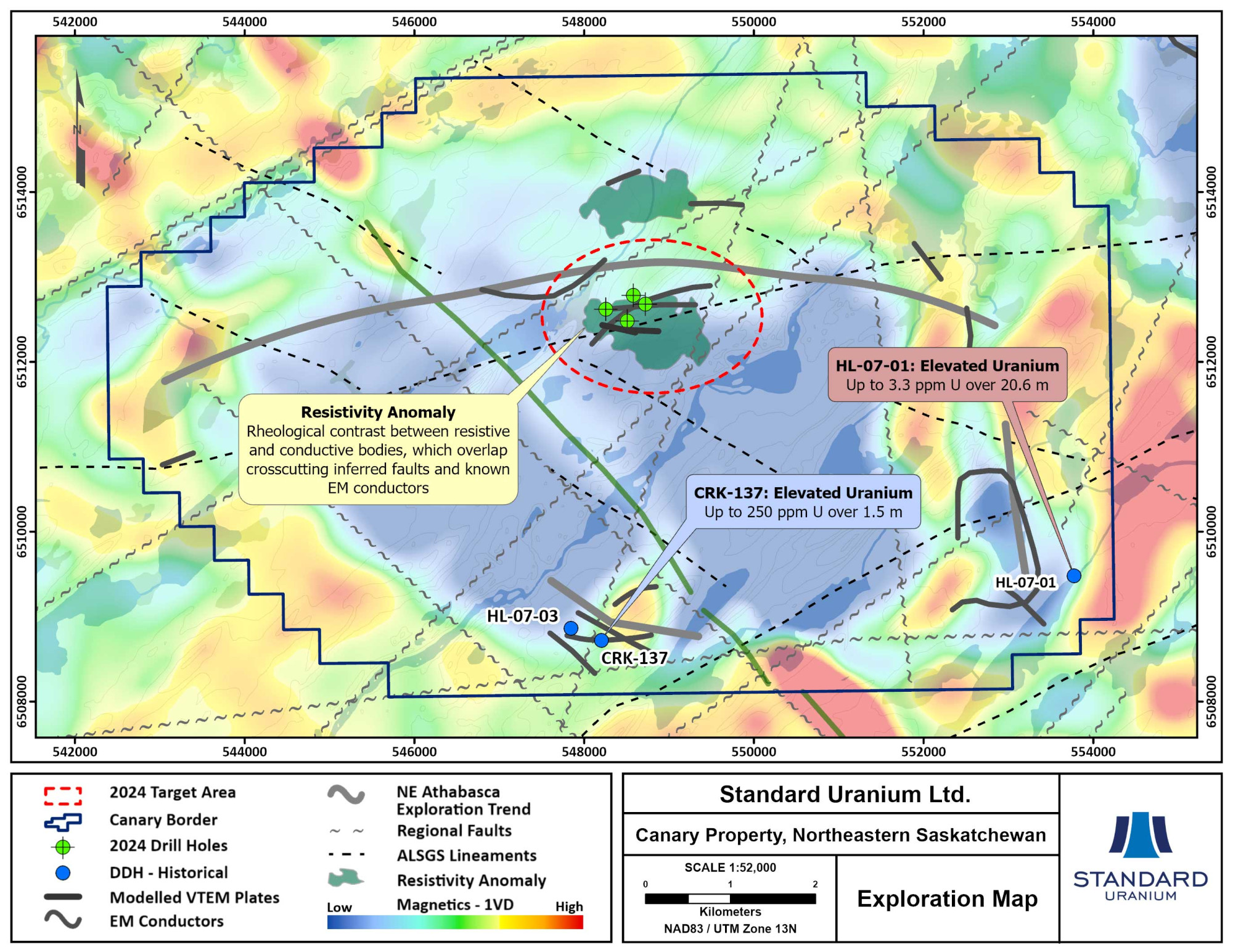
Historical airborne electromagnetic work between 1993 and 2006 identified 3 main conductive systems that represent trends of graphitic metasedimentary rocks - prospective host rocks for uranium mineralization. Furthermore, ground electromagnetic (“EM”) and direct current/induced polarization (“DCIP”) surveys have confirmed two prospective target areas on the property related to structural disruptions of the conductive corridors. In addition, depth to the Athabasca-basement nonconformity is known to be between 84 and 230 m from the surface on the project, resulting in shallow drill target depths. Exploration at the Canary project is early stage, and it remains highly prospective for unconformity-related and basement hosted uranium mineralization.
Historical drill-hole CRK-137 identified highly anomalous uranium enrichment near the unconformity with 10 ppm U over 7.4 m in systematic composite sampling of the sandstone, and strong hydrothermal alteration observed throughout the interval. Within this zone, a discrete 0.5 m sub-interval returned 103.1 ppm U; and a 1.0 m interval in the graphitic metasediments immediately below the unconformity returned 200 ppm U.
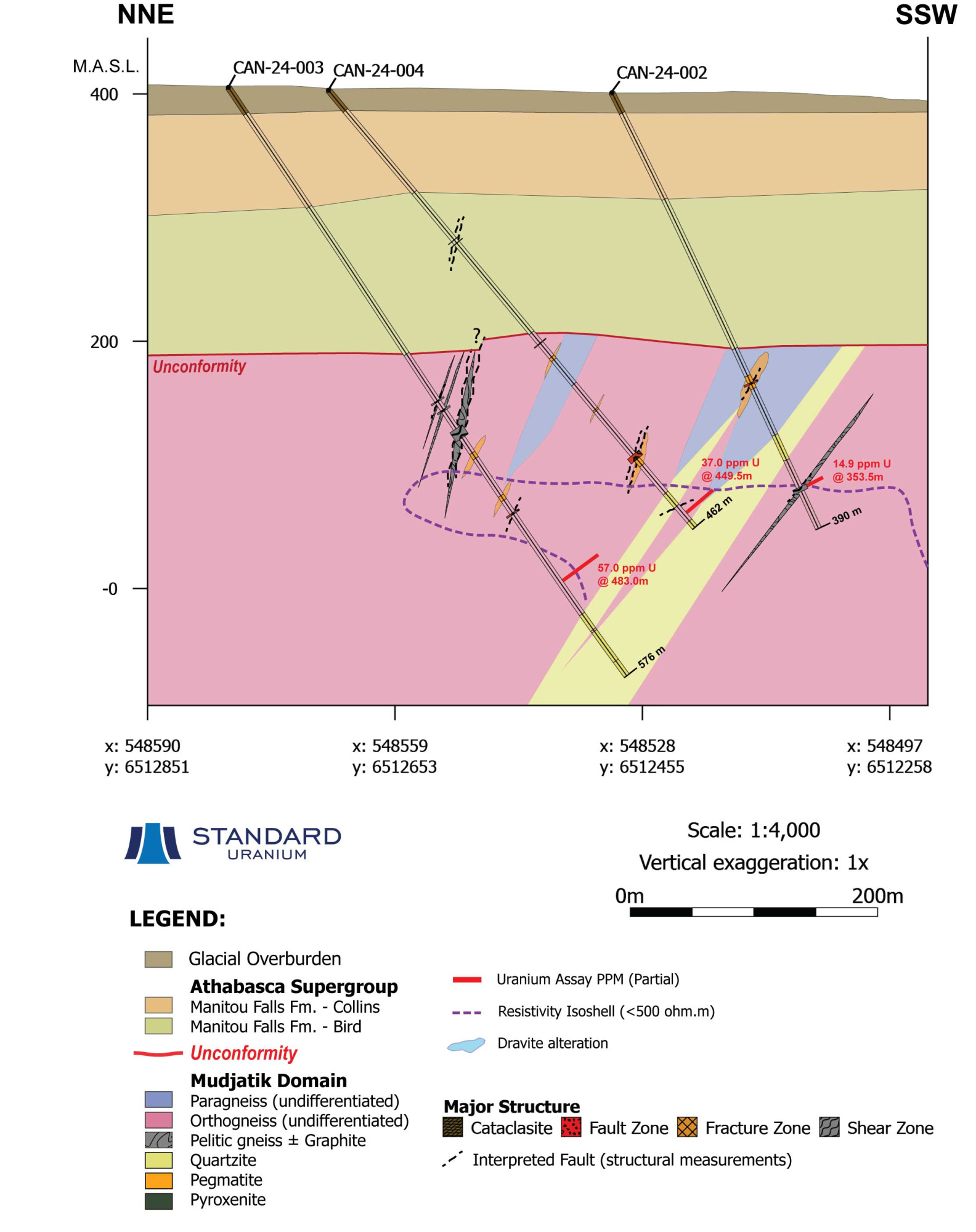
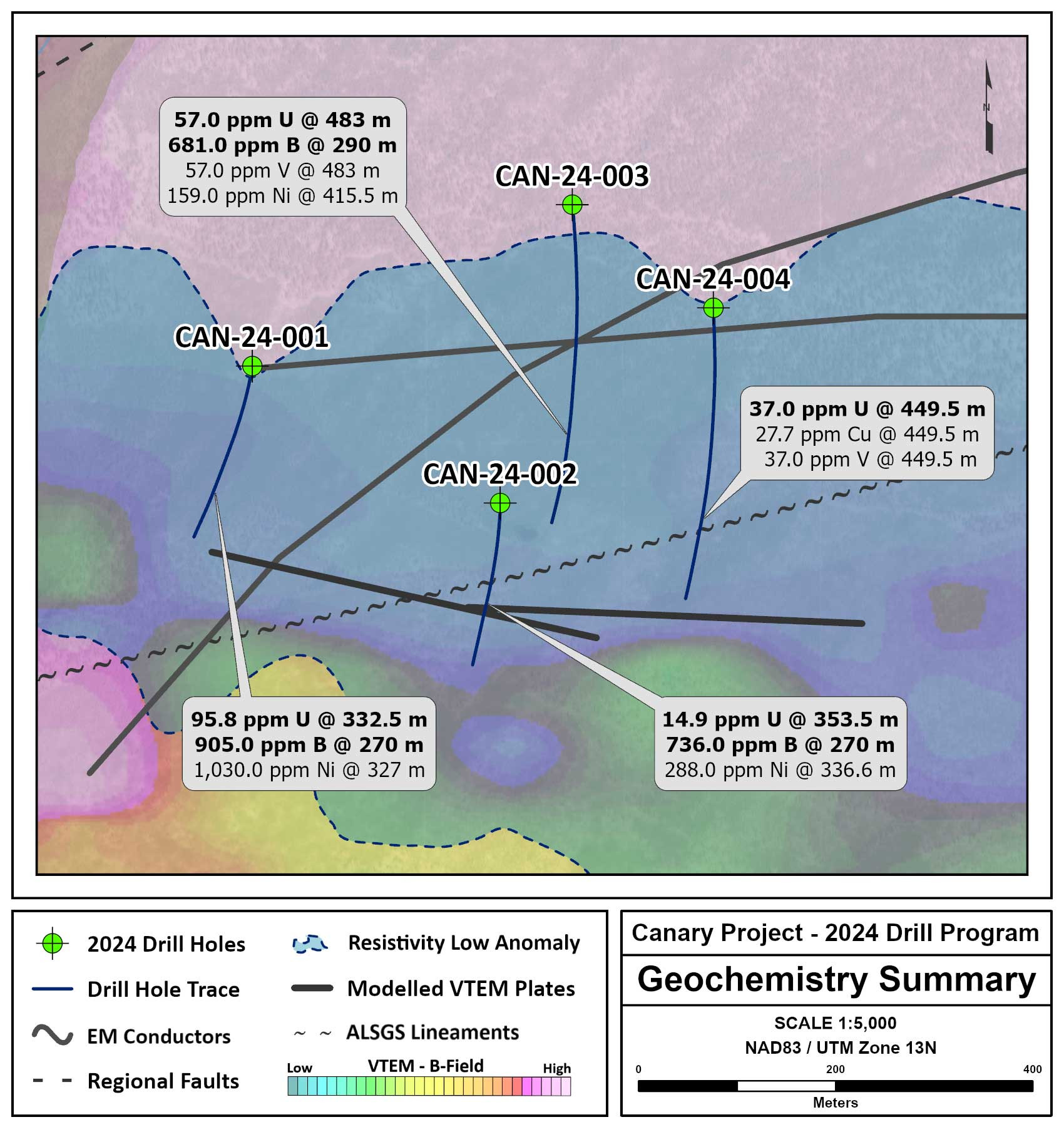
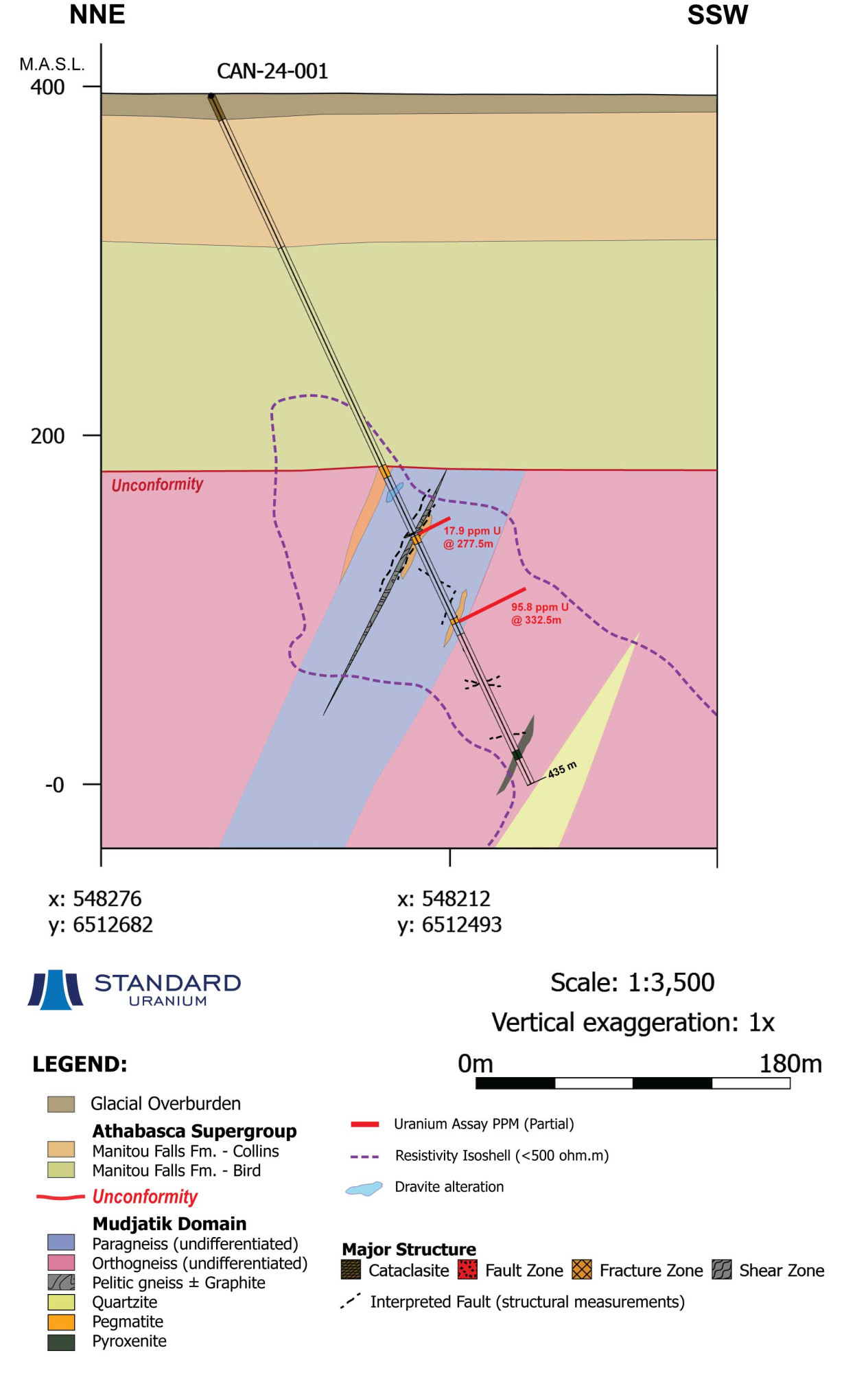
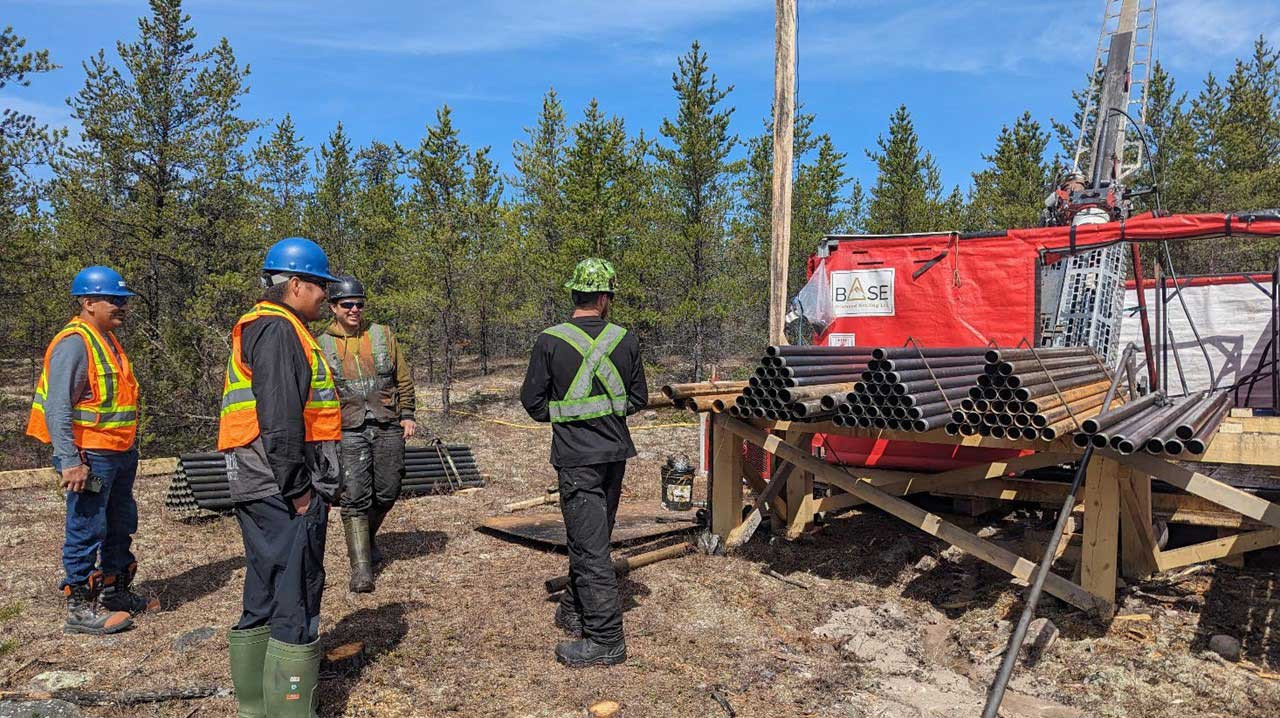
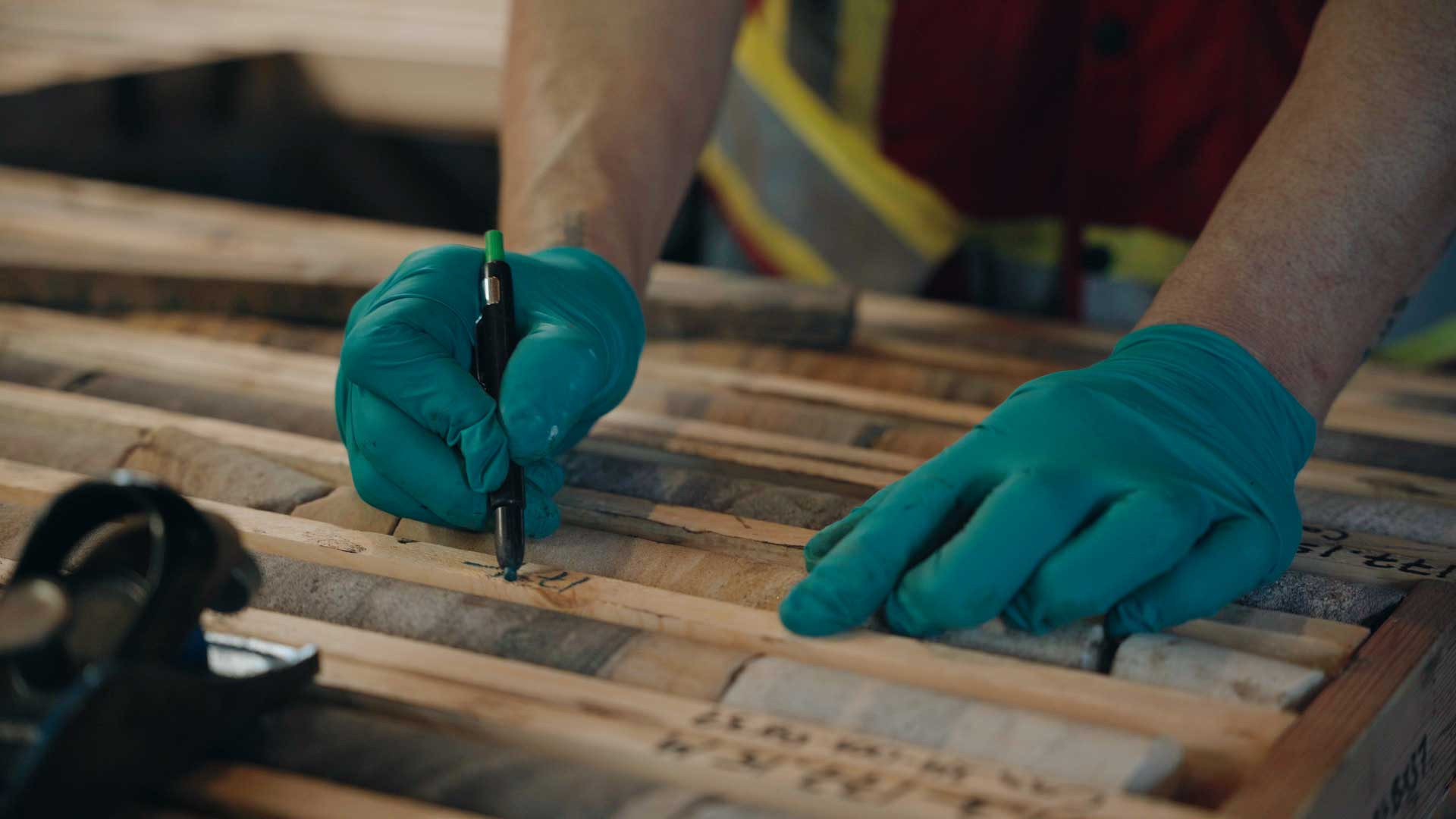
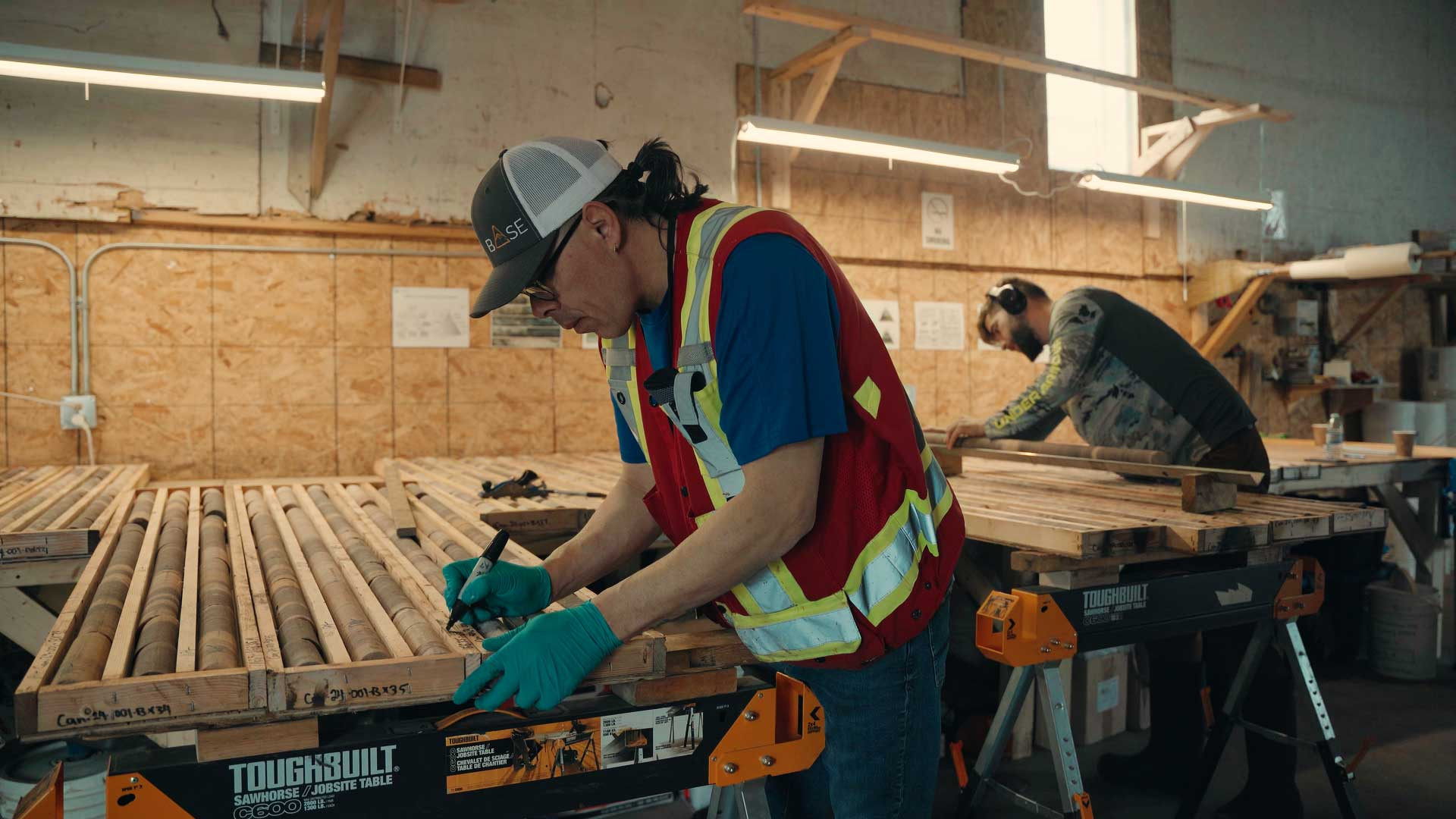
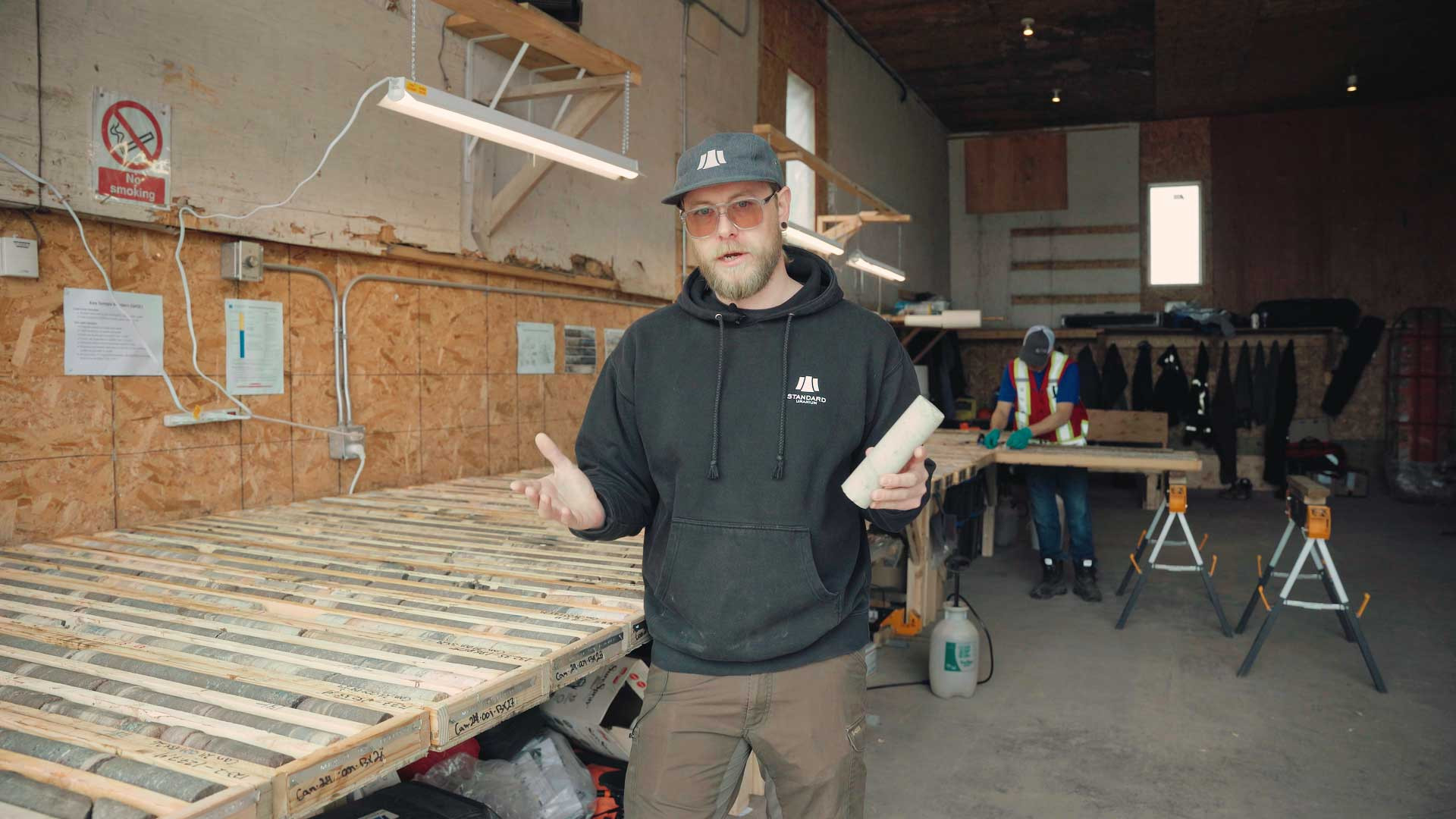
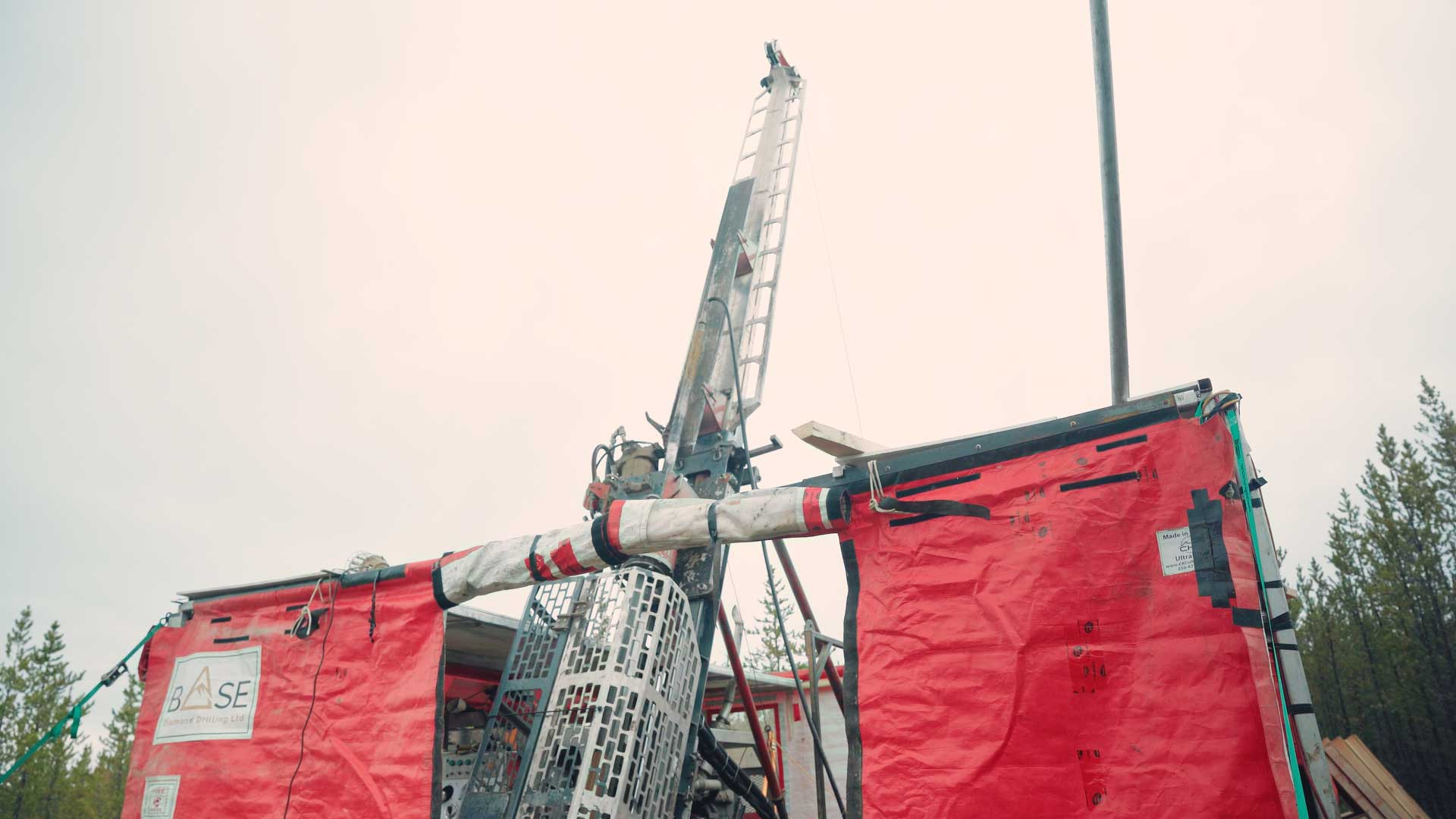
The spring 2024 drill program comprised 1,863 m of diamond drilling across 4 drill holes. Inaugural drilling intersected multiple key characteristics of a uranium-bearing mineralized system along the previously untested northern conductive trend on the Project, including favorable hydrothermal alteration, highly deformed metasedimentary and metasomatized basement rock packages, and a potential “quartzite ridge” in the corridor footwall. Analytical data confirmed the intersection of elevated uranium within the basement rock in all four holes drilled during the spring drill program as well as local fracture-controlled dravitic clays.
The drill program was designed to test the newly outlined resistivity-low anomalies along the northern conductor trend, defined by the 2022 ground DCIP survey. Spring 2024 drilling focused on testing the 3D resistivity anomaly both at the unconformity and in the basement, coinciding with modeled EM conductors.
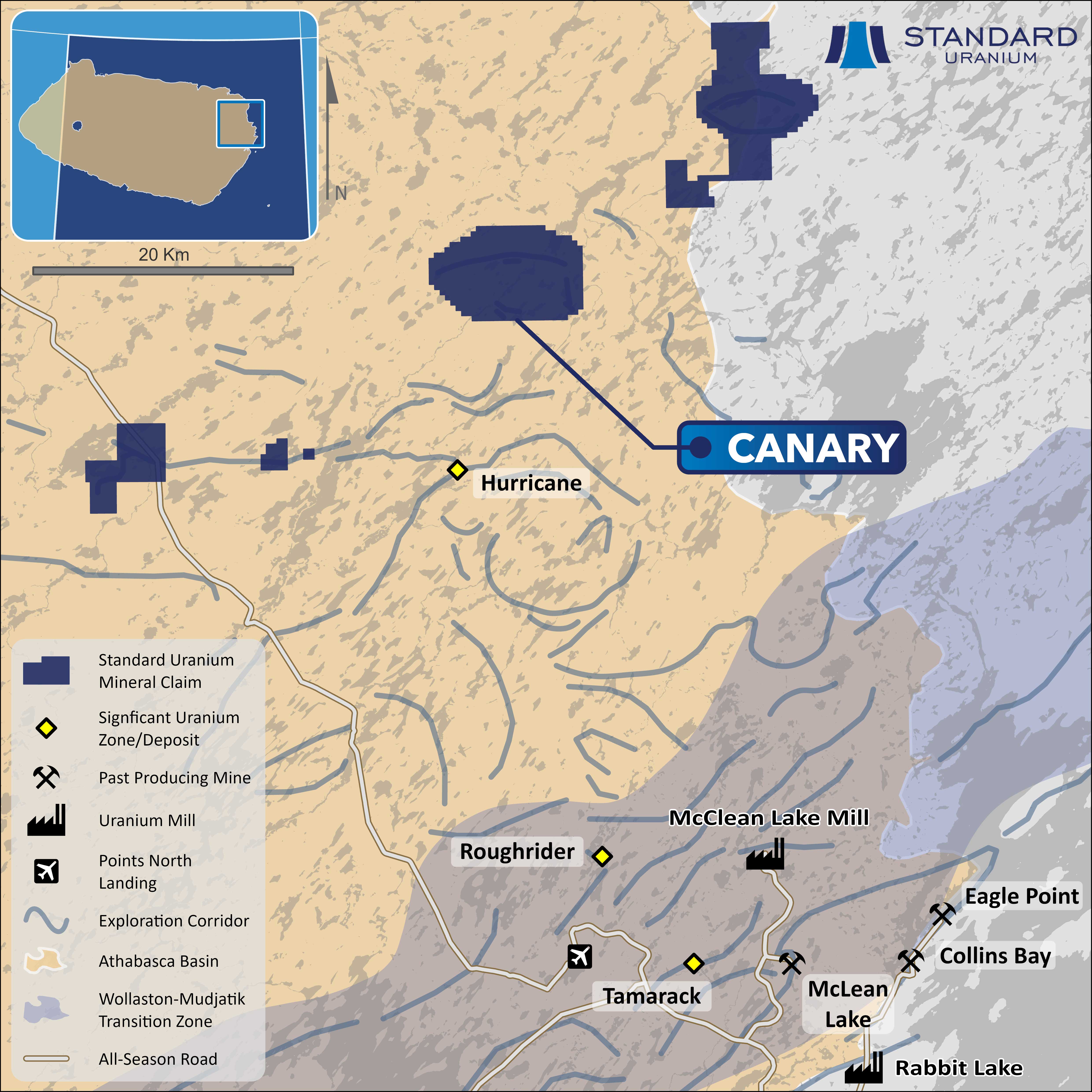
Northeastern Athabasca Uranium District
Disclosure of Technical and Scientific Information
Except as otherwise noted herein, Sean Hillacre, MSc. P.Geo., Standard Uranium’s VP Exploration, has reviewed and approved the scientific and technical information contained in this website. Mr. Hillacre is a Qualified Person within the meaning of Canadian Securities Administrator’s National Instrument 43-101.